
Buying guide · Updated in 2026
Curved or flat? Why the whole Kuycon range is flat
Curvature solves a real problem, but it creates others. Kuycon has made its choice: no model in the range is curved, including the 40-inch 21:9. Here is the reasoning behind that choice, and the cases where you should look elsewhere.
In pictures
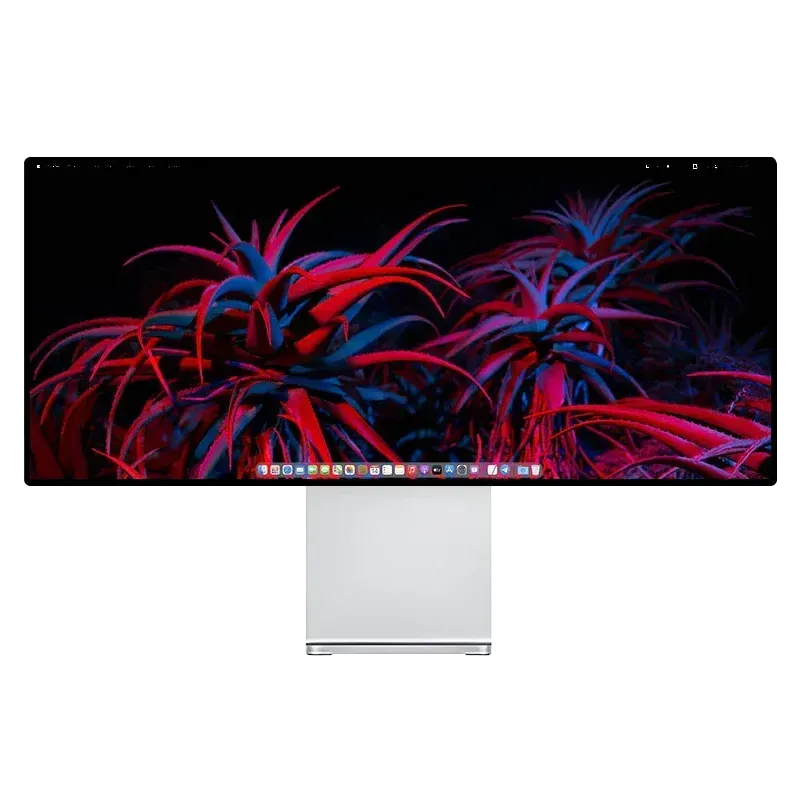
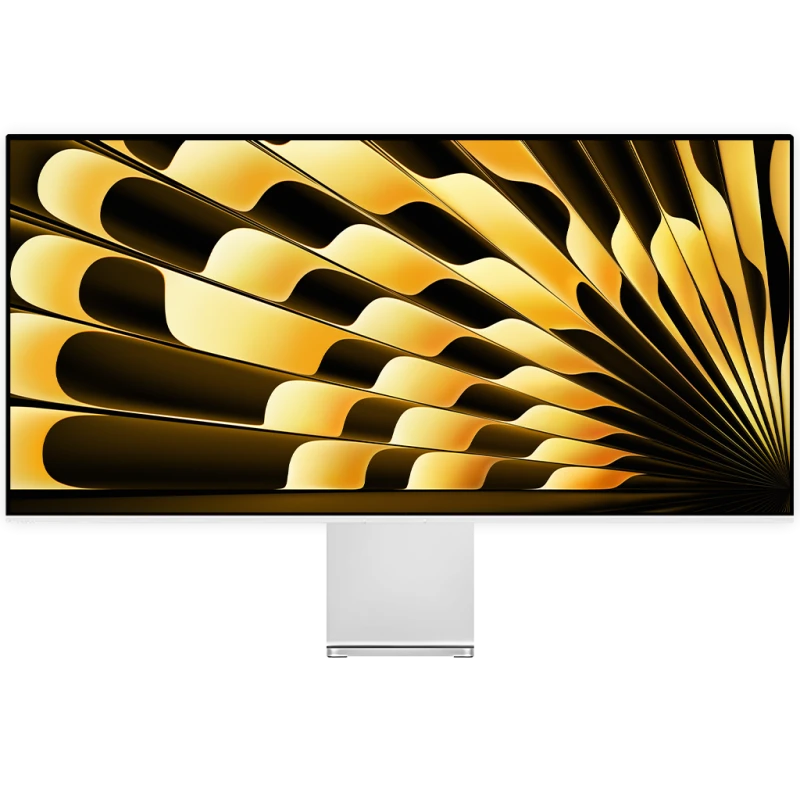
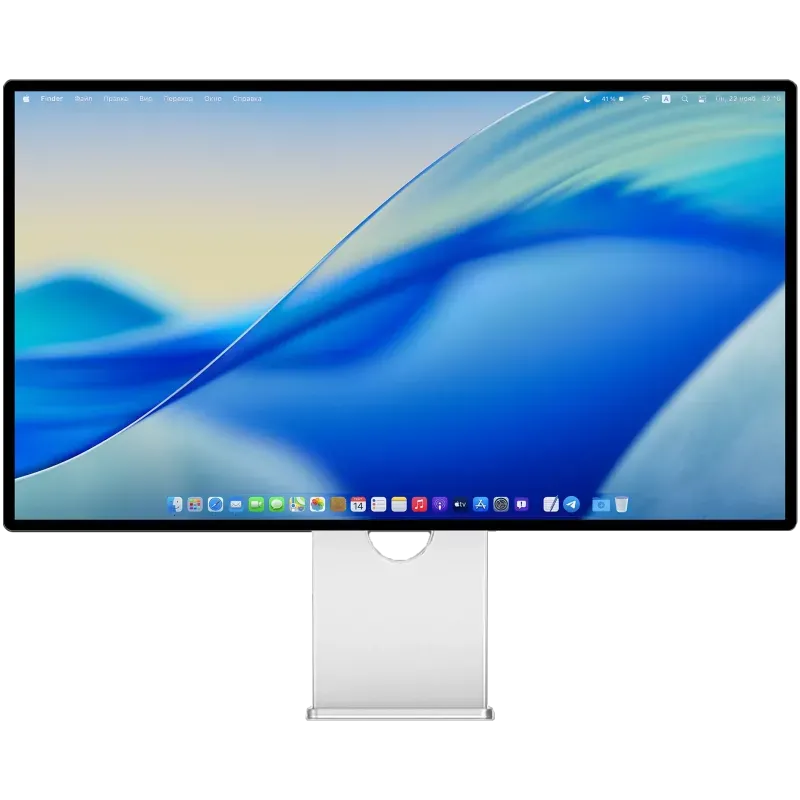
The two wide formats in the range
Two very wide monitors, both with flat panels.
The problem curvature solves
On a very wide monitor, the edges are further from your eyes than the centre. The difference is negligible on a 27-inch; it becomes perceptible beyond 34 inches in 21:9, where the eye has to focus slightly differently depending on the area you are reading.
A curved panel corrects that by bringing the ends towards you: the eye-to-screen distance becomes roughly constant across the whole width. Hence that sense of being enveloped that gamers and simulation enthusiasts seek.
What curvature costs
- Straight lines are no longer quite straight. Of no importance in games or video; problematic in CAD, layout, architecture and retouching, where you judge alignments. It is the point that weighed most in the range's choice.
- Screen sharing becomes uneven. Someone sitting beside you sees a markedly less accurate image than on a flat panel. To show a drawing, a listing or a mock-up to a client, that is a real handicap.
- Wall mounting and dual monitors become complicated. A curved monitor does not sit flat against a wall, and two curved monitors side by side never line up cleanly.
- Photo and video are harder to judge: the geometry of the displayed image is no longer that of the file.
Why Kuycon chose flat, everywhere
The range is aimed first at users who produce: development, photography, editing, CAD, architecture, client presentation. In all those professions, the straightness of lines and the accuracy of geometry count more than the sense of being enveloped.
The case of the P40K is revealing: it is a 40-inch in 21:9, the width at which curvature would be most justified — and it is flat. The reasoning: at 5120 × 2160, this monitor replaces a dual-monitor setup at a production workstation. Curving it would have served the gamer and disserved the editor, the architect and the photographer.
The same logic for the Q34W at 3440 × 1440: at that width, the difference in distance between the centre and the edges stays moderate, and the flat panel preserves the reading of alignments.
And on 16:9 monitors?
The question does not arise. Below 32 inches in 16:9, the difference in distance between centre and edges is too small for curvature to bring anything measurable. Almost every 16:9 on the market is flat for that reason.
Frankly
When you should look elsewhere
A curved monitor will suit you better if…
- your main use is gaming, simulation or racing;
- you are looking above all for immersion on a 34-inch or larger;
- you are alone in front of the screen and never show it to anyone;
- you do no CAD, no layout and no retouching.
Flat is the clear choice if…
- you judge alignments: drawings, mock-ups, layout;
- you show your screen to clients or colleagues;
- you are planning a wall mount or a dual-monitor setup;
- you work on photo or video;
- the monitor is 32 inches or less, where curvature brings nothing.
FAQ
Curved or flat: frequently asked questions
Is there a curved Kuycon monitor?
No. The whole range has flat panels, including the wide formats: the Q34W at 3440 × 1440 and the P40K at 5120 × 2160. It is a deliberate choice, tied to the professions addressed.
Does a curved monitor tire the eyes less?
Across a very large width, curvature makes the eye-to-screen distance more constant from edge to edge, which can reduce the effort of focusing. On a 27 or a 32-inch, the difference is too small for it to count.
Why not offer a curved model?
Because curvature slightly deforms straight lines and distorts perceived geometry. For development, CAD, photography, layout or client presentation, that is a flaw, not an advantage.
Is the 40-inch P40K curved?
No, it is flat. And yet that is the width at which curvature would be most justified: the choice of flat comes from its main use, replacing a dual-monitor setup at a production workstation.
Can you show a curved monitor to someone?
Less well than a flat panel: someone sitting to one side sees a noticeably distorted image. If you often present your screen, flat is considerably preferable.
Straight lines, across the whole width
From the 34-inch in 21:9 to the 40-inch at 5120 × 2160, all with flat panels. 2-year warranty in the European Union.
See all Kuycon monitorsGuide written in August 2026. The specifications are those published by the manufacturer; check the product page before buying.