
Professions · Updated in 2026
Music production and audio studio: the monitor people forget to choose
In computer-based music production, the monitor is not an instrument: it is a virtual mixing desk you look at for hours. Two criteria count, and neither is resolution: the width of the timeline, and silence.
Our selection
Two formats for a timeline
The first criterion of a sequencer is the number of bars visible without scrolling.
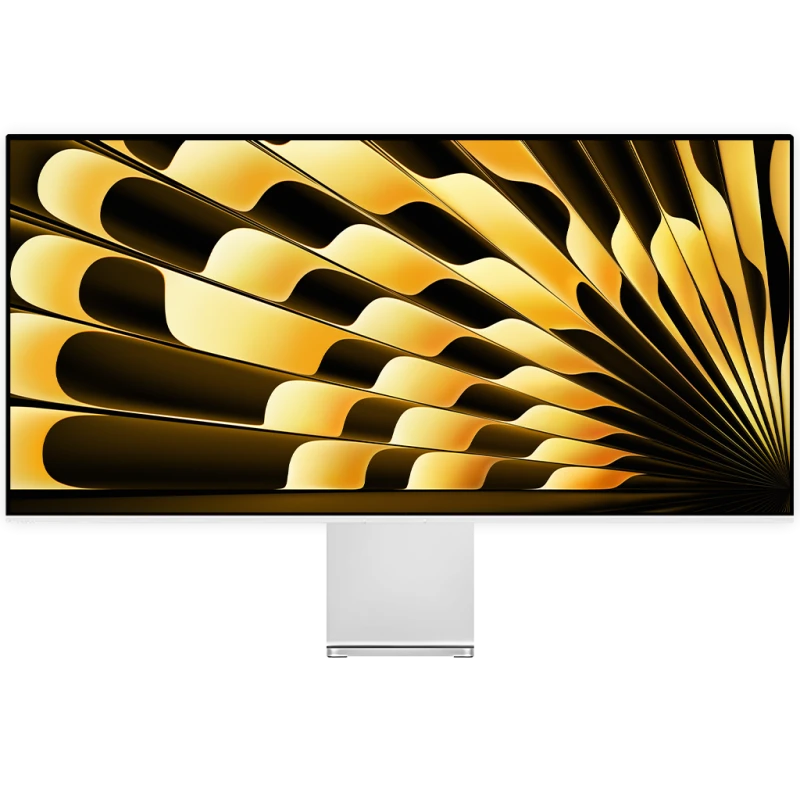
Kuycon P40K
40" · 21:9 · 5120 × 2160
From €1,279.00 incl. VAT
- Usable width5120 points
- Format21:9
- Legible at100 %
- Finishmatte
- USB-C100 W
- Fannone
Why we recommend it: 5120 points wide, legible with no scaling, means a whole arrangement visible at a glance, with the mixing desk and plug-ins open beside it. And no fan in a room where you listen.
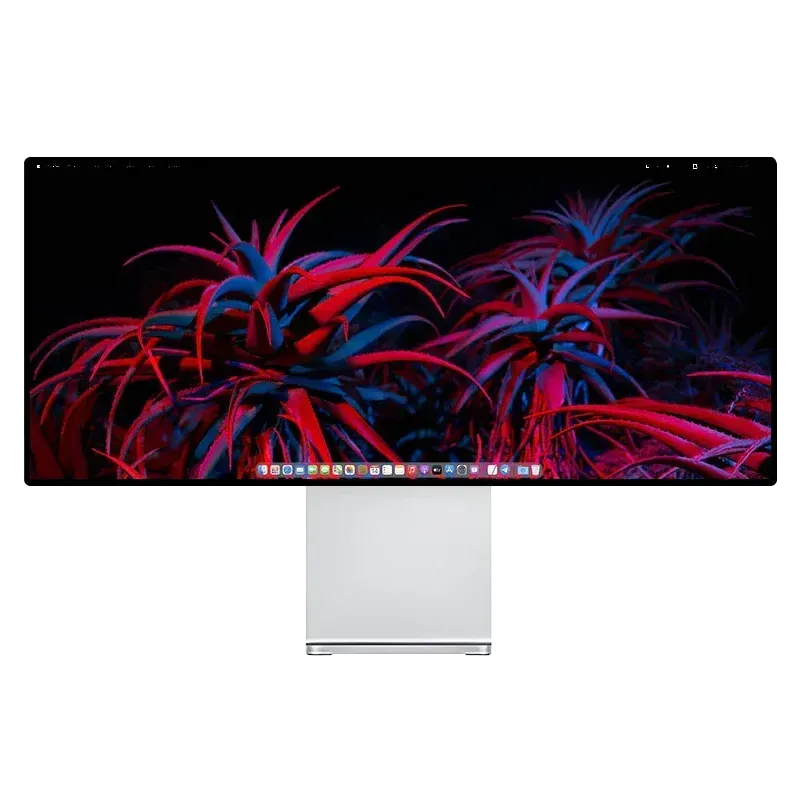
Kuycon Q34W
34" · 21:9 · flat
From €769.00 incl. VAT
- Usable width3440 points
- Density109 ppi
- Refresh rate165 Hz
- PanelFast IPS
- USB-C100 W
- Price< 700 €
Why we recommend it: 3440 points wide at 100%, with no scaling: track labels stay legible and the timeline has room to breathe, for less than €800. A flat panel, so waveforms with accurate geometry.
Width before fineness
This is where music production diverges from photography. A sequencer displays a horizontal timeline: what counts is the number of interface points across, not density. A 27-inch 5K panel, magnificent for text, offers only 2560 usable points — less than an ultrawide at 3440 or 5120.
In other words: for a studio, a 21:9 at 139 ppi is objectively more useful than a 16:9 at 218 ppi, even though it sometimes costs less. It is one of the few professions where we do not recommend high density.
Silence, a non-negotiable criterion
In a listening room, every background noise counts. The monitors in the range run with no fan: the machined aluminium chassis dissipates the heat through its surface. There is nothing to hear, neither at start-up nor after eight hours.
A second point: some monitors emit a slight electronic whine at low brightness, related to the way the backlight is dimmed. Continuous dimming avoids that phenomenon — worth checking on any monitor destined for a studio, whatever the brand.
Portrait mode for tracks
A second monitor rotated 90 degrees shows a tall column: the track list, the sound browser, the effects chain. That frees the whole width of the main monitor for the timeline. Kuycon stands provide the rotation as standard; see dual monitors: setting them up properly.
One cable, and the hub
Many studios work on a laptop. A USB-C monitor powers the machine and connects keyboard, mouse and interfaces over the same cable: the desk stays clear, and there is only one wire to plug in on arrival. Take care, however, to keep your audio interface on a dedicated port on the computer if your setup is sensitive to that.
FAQ
Music production: frequently asked questions
Which monitor for a home studio?
A 21:9 format: the P40K at 5120 × 2160 for the largest timeline in the range, or the Q34W at 3440 × 1440 for less than €800. Width counts more than density in music production.
Do you need a 5K panel for music?
No, and it is one of the few professions where we do not recommend it: a 27-inch 5K offers only 2560 usable points across, against 3440 or 5120 on an ultrawide, for a comparable price.
Do the monitors make any noise?
No: they run without a fan, the aluminium chassis acting as a heat sink. In a listening room, that is a non-negotiable criterion.
Is portrait mode useful in music production?
Yes as a second monitor: a tall column suits the track list, the sound browser or an effects chain perfectly, and frees the whole width of the main monitor for the timeline.
Can I plug my audio interface into the monitor's hub?
It is possible, but if your setup is sensitive to latency or power, keep the audio interface on a dedicated port on the computer and reserve the hub for everyday peripherals.
Width, and silence
Up to 5120 points of timeline, with no fan. 2-year warranty in the European Union.
See the ultrawide monitorsGuide written in August 2026. The specifications are those published by the manufacturer; check the product page before buying.